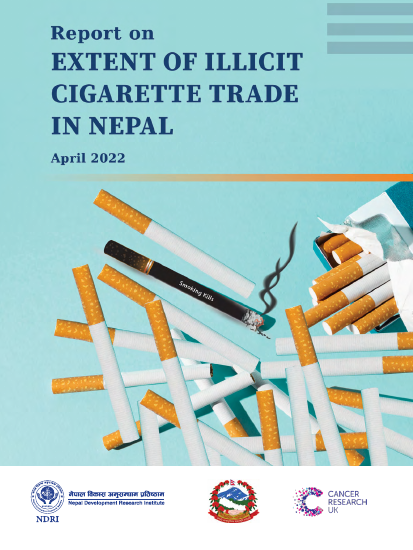
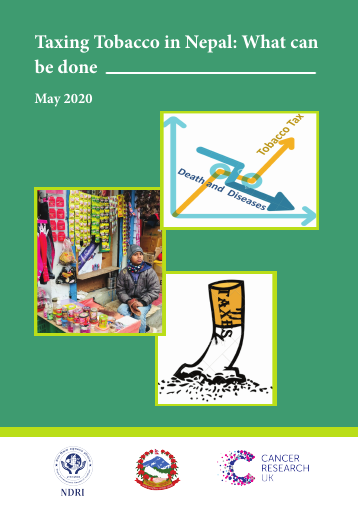
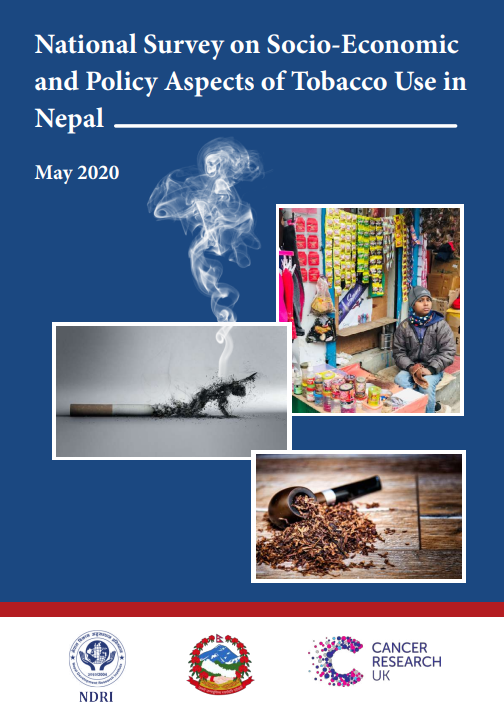
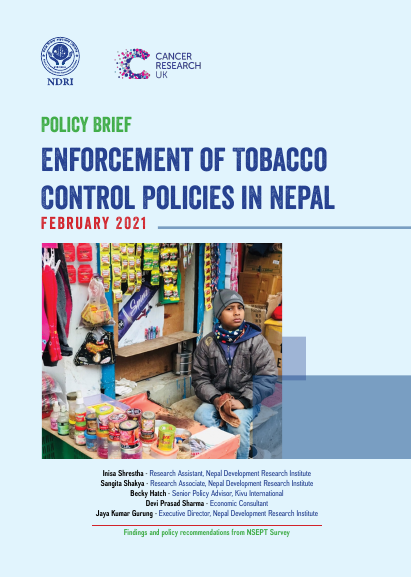
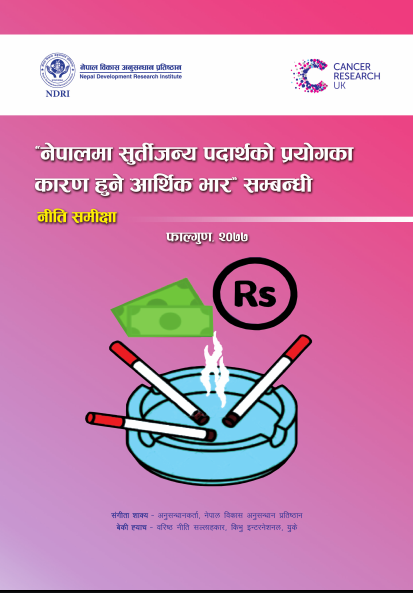
Tobacco Control Program (Cancer Research UK)
Background
The TCP –II (2021-2024) is a Cancer Research UK-funded initiative that works to prevent and control tobacco use in Nepal. This project focuses primarily on policy advocacy and salience raising for tobacco control. Additionally, it is politically informed, with a policy advocacy strategy that acknowledges how little importance tobacco control has in Nepal.
The TCP-I (2019-2021) emphasized the creation of evidence-based foundations for policy advocacy and lobbying. Having accomplished this, the initiative has now shifted towards a coalition-driven approach to impact policy. A collective of various organizations, interest groups, and individuals will rally to persuade policymakers to increase tobacco taxes. The NDRI spearheads this coalition.
Objectives
The general objective of the program is to achieve policy influence by substantially expanding and intensifying efforts on public and political salience raising through a “coalition-based” approach to influencing evidence-based policy. And, the specific objectives are:
• Further increase the supply of quality policy-relevant, politically-informed research outputs.
• Further deepening NDRI’s networks with powerful government officials and politicians.
• Developing effective and context-appropriate policy influencing coalitions of influential partners.
• Capacity building for NDRI and other “coalition partners”.
Key Impacts
As a center of excellence, NDRI has embarked on a new policy issue. The research conducted by NDRI has generated evidence for policy change and bridged gaps in knowledge.
• NDRI has been successful in bringing the policy impact. The FY 2021-22 Budget included the highest rise in tobacco taxation in over a decade, a 25% increase in cigarette excise rates and the 2022-23 Budget included a 20% rise in excise duty. This has been possible because of evidence-informed policy advocacy activities conducted by NDRI.
• Another achievement includes the formation of a coalition with local CSOs, government organizations, and politicians to support more effective tobacco control strategies. NDRI has been leading this coalition for policy advocacy and change.
NDRI reaffirms its commitment to integrity, transparency, and independence through this COI Policy.
_1787045433.jpg)
Conflict of Interest (COI) Policy on Tobacco Control, NDRI
Nepal Development Research Institute (NDRI) is committed to upholding the highest standards of integrity, independence, and scientific excellence in its tobacco control research and policy engagement. NDRI conducts all tobacco control activities free from commercial influence and does not accept funding, sponsorship, donations, or any other form of support from the tobacco industry or from organizations or individuals acting on its behalf.
In line with Article 5.3 of the WHO Framework Convention on Tobacco Control (WHO FCTC), NDRI is dedicated to protecting public health policies and research from tobacco industry interference. Through transparent, evidence-based research and advocacy, NDRI remains committed to advancing policies that safeguard public health and promote accountability. This policy applies to all NDRI staff, researchers, interns, consultants, invited speakers, members of the Board and Advisory Committees, and partner organizations involved in any tobacco control research, policy, advocacy, training, or related activities conducted under the name of Nepal Development Research Institute (NDRI).
Study Team
• Dr. Jaya Kumar Gurung, Senior Research Specialist
• Ms. Anjana Lamichhane, Research Associate