NDRI Organizes a Collaborative Expert Consultation and Working Dialogue
Date: 24-Dec-2025
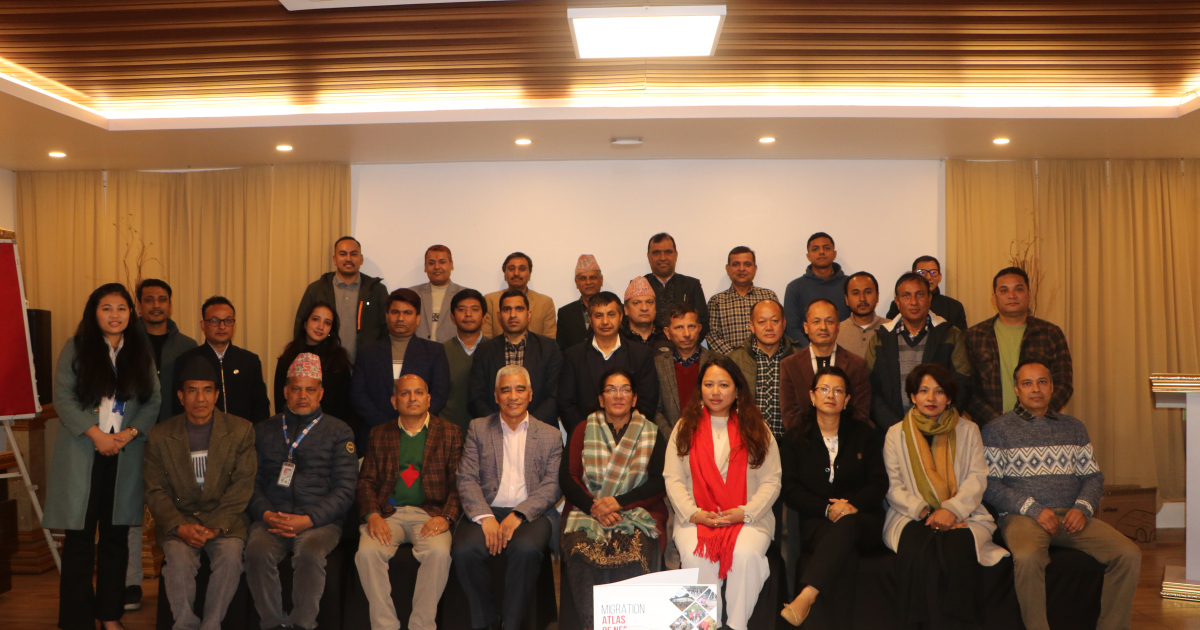
Nepal Development Research Institute organized a one-day collaborative expert consultation and working dialogue on Migration-Livelihood Interlinkages: Building a Coordinated Policy Response on December 24, 2025 at Shangrila Blu Hotel, Lalitpur. The workshop was the culmination of NDRI’s ongoing Migration Atlas of Nepal project, which highlighted the multifaceted nature of Nepal’s migration patterns and how it impacts various facets of people’s livelihoods. The workshop brought together over 35 policy practitioners and sector experts from multiple civil service organizations, government institutions, and development partners working on Nepal’s migration discourse to come up with a list of actionable recommendations for the way forward through consultations on the multifaceted links between labour migration and livelihoods in Nepal. The workshop facilitated an interactive, multi-stakeholder dialogue to explore the interconnected dimensions of labour migration and livelihoods and co-develop actionable policy directions that can strengthen rural economies, protect migrant workers, and enhance national migration governance.

The working dialogue started with a brief introduction of the participants and welcome remarks by NDRI Executive Director, Dr. Shikha Thapa Magar, NDRI President Dr. Jaya Kumar Gurung, and AWO International Regional Director South Asia, Mr. Surendra Gautam. Dr. Krishna Pahari, the study lead on the project and Lead of the Livelihoods and Food Security Program, delivered a short setting-the-context presentation to familiarize participants with the objectives and findings of the Atlas. The workshop participants then broke into smaller groups to discuss broad and specific policy recommendations for assigned thematic areas, which included addressing migrants’ needs, channeling remittances into productive investments, gendered experiences of migration, rural labour shortages and agricultural productivity, youth aspirations, and the role of data in migration governance. Their discussions under each of the topics were facilitated by specific guiding questions. In the afternoon, the participants had the opportunity to present their group discussions to everyone by focusing on the prevailing situation, the gaps, and the corresponding recommendations under each of the topics. The event concluded with a synthesis of the recommendations.

The thematic areas for discussion were motivated by the Atlas’ policy considerations as well as the discourse that took place during the high-level dissemination event held on November 7, 2025, that officially unveiled the Migration Atlas of Nepal. The event underscored Nepal’s urgent need for coordinated, youth-responsive and evidence-based migration and livelihood policies, highlighting the mismatch between aspirations and opportunities, the pressures on agriculture and rural systems, the importance of skills, protection and reintegration, and the critical role of governance and institutional trust in shaping evidence-driven policies that strengthen both domestic opportunities and migrant wellbeing.


Moving forward, NDRI will document and synthesize the workshop deliberations into a comprehensive proceedings report, capturing key discussions and policy recommendations across all thematic areas. This will be shared with the workshop participants as well as relevant stakeholders and institutions working on various issues related to migration and livelihood strengthening.